
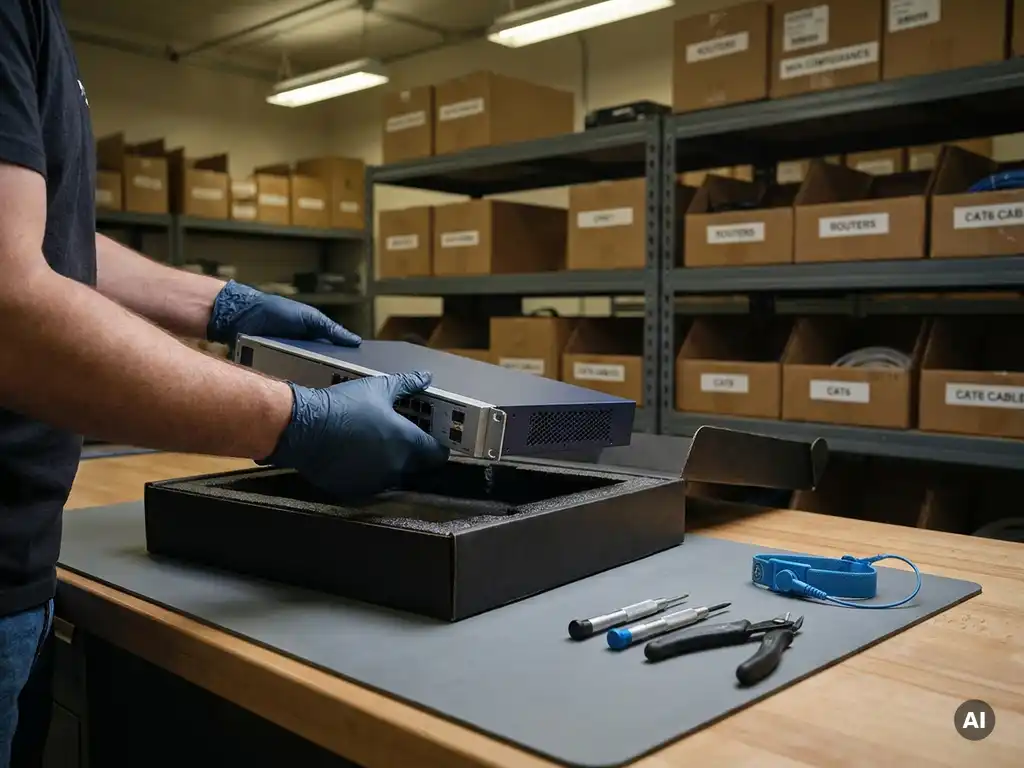
Specialised fulfilment is important for high-value electronic equipment because standard logistics processes are not designed to handle the traceability, technical preparation, and careful handling these products require. A generic fulfilment provider may lack the infrastructure to track individual devices by serial number, manage configuration requirements, or process returns in a structured way. The sections below address the most common questions businesses ask when evaluating their fulfilment options for technology products.
What risks arise when high-value electronics are handled by a standard fulfilment provider?
When high-value electronics are handled by a standard fulfilment provider, the primary risks include inventory inaccuracies, inadequate traceability, improper handling, and insufficient returns processing. Standard providers are typically optimised for volume throughput rather than product-level precision, which creates significant gaps when managing serialised technology products.
High-value equipment such as routers, modems, medical devices, or networking hardware often carries individual serial numbers that must be recorded and tracked throughout the supply chain. A standard warehouse management system may not support serial-number-level registration, meaning a business cannot reliably confirm which specific unit was shipped, returned, or stored at any point in time. This lack of visibility becomes particularly costly when a product recall, warranty claim, or audit is required.
Beyond traceability, standard providers may not offer appropriate storage conditions, handling procedures, or packaging standards for sensitive electronics. Electrostatic discharge, rough handling, or improper packaging can damage components that appear undamaged externally but fail in the field. For B2B technology companies, a single shipment error can affect customer installations, delay deployments, or trigger expensive replacement cycles.
How does serialised tracking work in electronics fulfilment?
Serialised tracking in electronics fulfilment is the process of registering and monitoring individual products by their unique serial numbers throughout every stage of the logistics chain, from goods receipt through storage, order processing, outbound shipping, and returns. It provides product-level visibility rather than batch-level visibility.
When a shipment arrives at the warehouse, each device is scanned and its serial number is recorded in the warehouse management system alongside details such as product condition, location, and any relevant configuration status. This creates a unique digital record for every individual unit. When an order is picked, the system confirms that the correct serialised unit is selected, reducing the risk of shipping the wrong device or a unit in an incorrect state.
For telecommunications operators managing large volumes of routers or set-top boxes, or for IT distributors handling networking hardware, this level of granularity is essential. Serialised inventory management allows businesses to respond quickly to warranty queries, identify which customers received which units, and maintain accurate stock records even across high-turnover product ranges. It also supports compliance requirements in regulated sectors such as healthcare technology, where device identification is a formal obligation rather than a preference.
A capable serialised inventory approach integrates naturally with value-added logistics services such as labelling, repackaging, and condition grading, ensuring that the product record remains accurate at every point of intervention.
What technical services should a specialised electronics fulfilment provider offer?
A specialised electronics fulfilment provider should offer technical services including device configuration, firmware updates, functional diagnostics, component assembly, cosmetic restoration, and repair of defective equipment. These capabilities allow products to be prepared for deployment, resale, or reuse directly within the logistics environment, reducing unnecessary transportation and handling steps.
For telecom equipment fulfilment specifically, configuration is often a critical requirement. Routers, IP telephones, and DECT systems frequently need customer-specific configuration files installed before they can be shipped to end users or field technicians. Without this capability integrated into the fulfilment process, businesses must either perform configuration in-house or rely on a separate technical partner, adding time and cost to every deployment cycle.
Firmware management is equally important. Shipping devices with outdated firmware creates compatibility issues and support burdens. A fulfilment partner that can apply firmware updates as part of the outbound preparation process ensures that every device arrives ready for use without requiring additional intervention at the installation point.
Beyond configuration, the ability to perform diagnostics and basic repairs on-site means that defective units identified during inbound checks can be assessed and, where possible, restored rather than immediately returned to the manufacturer or written off. This directly supports product lifecycle extension and reduces unnecessary waste. Businesses evaluating a technical services provider should confirm that these capabilities are genuinely integrated into the logistics workflow rather than offered as a separate, disconnected service.
How does specialised fulfilment support reverse logistics for electronics?
Specialised fulfilment supports reverse logistics for electronics by combining structured returns intake, product inspection, condition assessment, and technical processing within a single operational environment. This integration allows returned devices to be evaluated, repaired, or refurbished and reintegrated into available inventory rather than being discarded or left unprocessed.
Standard returns handling typically involves receiving a product, logging it as returned, and either restocking it or flagging it for disposal. For technology products, this approach is insufficient. A returned router may have a configuration issue rather than a hardware fault. A returned medical device may be fully functional but require cosmetic restoration before it can be redistributed. Without the technical expertise to assess these conditions accurately, businesses lose recoverable value on every return.
Effective reverse logistics for electronics relies on real-time reporting that gives businesses visibility into return volumes, product conditions, and processing outcomes. This data supports better decisions about repair versus replacement, helps identify recurring product faults, and provides the documentation needed for warranty claims or supplier negotiations. The reverse logistics process should therefore be treated as a source of operational intelligence, not simply a cost centre.
It is worth noting that not every returned product can be refurbished or resold. The outcome depends on the product’s condition, the nature of the fault, and the commercial viability of restoration. A competent fulfilment partner will provide honest condition assessments rather than overpromising recovery rates.
What should businesses look for when choosing an electronics fulfilment partner?
When choosing an electronics fulfilment partner, businesses should look for serialised inventory management, integrated technical capabilities, transparent reporting, proven experience with technology products, and the ability to handle both outbound fulfilment and reverse logistics within a coordinated operational framework.
A warehouse management system that supports serial number tracking at the individual product level is a baseline requirement for IT equipment fulfilment. Without this, inventory accuracy will deteriorate as volumes grow, and the business will lack the traceability needed for audits, warranty management, and customer service. Ask prospective partners how their system handles serialised products and what visibility they can provide in real time.
Technical capability is the second critical factor. If your products require configuration, firmware preparation, or diagnostic testing before shipment, a partner without these services will force you to manage a separate technical workflow. Look for a provider where technical processing is embedded in the fulfilment operation rather than bolted on as an afterthought.
Geographical reach and reliability matter for B2B fulfilment in Europe, particularly for businesses serving multiple markets or operating across borders. A fulfilment partner with a strong European operational base can reduce transit times and simplify distribution across the region.
Finally, assess how the partner handles returns. A provider that offers structured fulfilment and returns management under one roof reduces the complexity of managing separate outbound and inbound logistics relationships, and gives a clearer picture of total operational costs and product lifecycle performance.
How BNS Data Logistics supports high-value electronics fulfilment
BNS Data Logistics provides specialised B2B fulfilment and product lifecycle services designed for businesses managing technology products, telecommunications hardware, IT equipment, and healthcare technology. For companies that need more than standard warehousing and shipping, BNS offers an integrated operational environment where logistics, technical services, and reverse logistics work together.
- Serialised inventory management: BNS registers and tracks individual products by serial number using its proprietary Cosmos warehouse management system, providing real-time visibility into stock locations, product conditions, and order movements.
- Technical preparation: BNS performs device configuration, firmware updates, functional diagnostics, component assembly, and cosmetic restoration as part of the fulfilment process, so products leave the warehouse ready for deployment or resale.
- Reverse logistics and returns processing: BNS manages the complete returns workflow, including intake, inspection, condition assessment, repair where applicable, and reintegration into inventory, supported by operational reporting.
- Value-added logistics services: BNS handles labelling, repackaging, palletisation, and co-packing to meet specific distribution or retail requirements without requiring a separate service provider.
- European operational base: Operating from Vianen in the Netherlands, BNS serves technology companies across Europe, supporting both domestic and cross-border distribution requirements.
The potential efficiency and cost benefits of these services depend on each business’s specific situation, product range, and operational requirements. If you are evaluating fulfilment options for technology products and want to discuss what a structured approach could look like for your business, contact BNS Data Logistics to speak with the team directly.
Related Articles
- How can value-added logistics services simplify technology product distribution?
- What are the benefits of integrating warehousing, fulfilment and device tracking?
- How can businesses track which electronic devices were delivered to each customer?
- How can telecom operators reduce errors in modem and router distribution?
- How can technology companies improve the fulfilment of serialized products?