
Integrating warehousing, fulfilment, and device tracking gives technology businesses a single, coordinated operational framework in which inventory data, order processing, and product-level traceability work together rather than in isolation. The result is fewer errors, greater supply chain visibility, and more efficient handling of both outbound orders and returned equipment. The sections below address the most common questions technology companies ask before making this transition.
How does integrating warehousing and fulfilment improve inventory accuracy?
Integrating warehousing and fulfilment improves inventory accuracy by eliminating the data gaps that occur when stock management and order processing operate as separate systems. When goods receipt, storage, picking, and dispatch are handled within a single operational environment, every movement updates the same inventory record in real time, reducing the risk of discrepancies between what the system shows and what is physically on the shelf.
In fragmented logistics setups, inventory data is often reconciled manually or updated in batches, which creates a window during which stock counts can drift. A product may be picked and packed but still appear as available in the warehouse management system, leading to overselling or delayed fulfilment. When both functions share a unified platform, stock levels reflect actual availability at every stage of the process.
For technology businesses handling serialised products such as routers, modems, or networking hardware, this accuracy becomes even more important. Each unit has its own identity, and a system that tracks individual items from the moment they arrive to the moment they leave provides a level of control that batch-level inventory management simply cannot match. Serialised inventory management ensures that the right unit reaches the right customer, with a clear record of exactly which device was dispatched.
What role does device tracking play in hardware fulfilment operations?
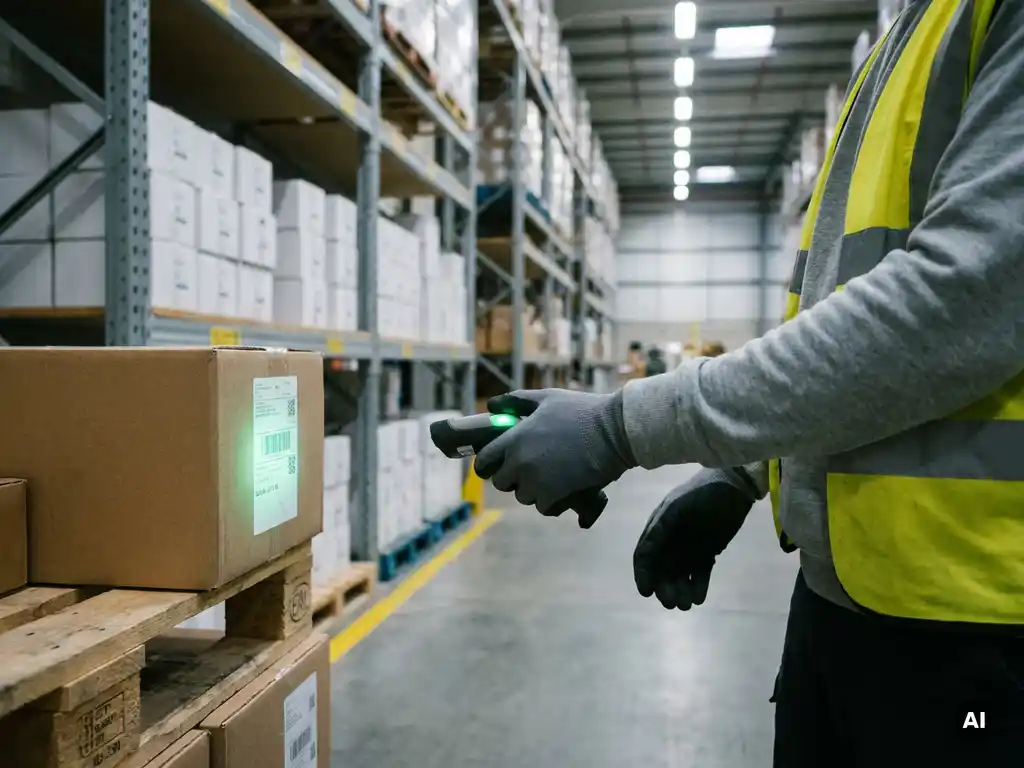
Device tracking in hardware fulfilment operations means assigning a unique identifier, typically a serial number or barcode, to each individual product and recording its location and status at every stage of the logistics process. This gives operations teams precise visibility into which specific units are in stock, which have been allocated to orders, and which are in transit, rather than relying on aggregate quantity figures alone.
For IT equipment and telecom hardware, this level of traceability is not optional. A modem or router is not interchangeable with another unit of the same model if it has been pre-configured with a specific firmware version or customer-specific settings. Serial number tracking ensures that the correct device, with the correct configuration, is matched to the correct order before it leaves the warehouse.
Device tracking also supports after-sales operations. When a customer reports a fault or returns a product, the serial number provides an immediate history of that unit, including when it was received, when it was dispatched, and whether it has been serviced or reconfigured. This information accelerates fault diagnosis and reduces the time spent investigating returns. In high-volume B2B fulfilment environments, that efficiency has a meaningful impact on operational throughput.
How does integrated logistics reduce operational costs for technology businesses?
Integrated logistics reduces operational costs for technology businesses primarily by consolidating activities that would otherwise require separate vendors, separate systems, and separate coordination efforts. When warehousing, fulfilment, device configuration, and returns handling are managed within a single operational framework, businesses avoid the duplication of effort, handover delays, and communication overhead that come with fragmented supply chains.
One of the most direct cost drivers in technology logistics is unnecessary product movement. When a device needs to be configured before it can be shipped, but the configuration service sits with a different provider than the warehouse, the product must travel between locations before it reaches the customer. Integrating technical services into the fulfilment workflow eliminates that additional transit step, reducing both handling costs and lead times.
Inventory holding costs also tend to decrease when warehousing and fulfilment are unified. Better stock visibility means businesses can maintain leaner inventory levels without risking stockouts, because they have accurate, real-time data on what is available and where. Fewer fulfilment errors mean fewer costly reshipments, and more reliable outbound processes reduce the customer service burden associated with incorrect or delayed deliveries. These are potential benefits rather than guaranteed outcomes, and the actual impact will depend on the complexity of the existing operation and the volume of products handled.
What are the benefits of combining device tracking with reverse logistics?
Combining device tracking with reverse logistics gives businesses clear visibility into returned equipment from the moment a return is initiated to the point at which a product is assessed, repaired, refurbished, or disposed of. Without serial-level tracking, returned items can become difficult to account for, leading to inventory write-offs, lost residual value, and poor data on return rates by product type or condition.
When a returned device carries a traceable identifier, the receiving team can immediately retrieve its history. They know whether the unit was recently shipped, whether it was previously repaired, and what configuration it was running. This information directly informs the inspection and triage process, helping teams make faster, more accurate decisions about whether a product can be reintegrated into stock, requires technical restoration, or has reached the end of its useful life.
For telecom operators and IT hardware distributors handling large volumes of returned equipment, this matters both operationally and commercially. Products that can be refurbished and redeployed represent recovered value. Products that are incorrectly classified as unserviceable and disposed of represent avoidable loss. Serialised reverse logistics makes the difference between a structured, data-driven returns process and one that relies on manual assessment with limited context. It also supports circular economy objectives by providing the evidence needed to demonstrate product reuse rates and diversion from waste streams.
When should a technology company switch to an integrated fulfilment model?
A technology company should consider switching to an integrated fulfilment model when the complexity of its logistics operations begins to outpace the capacity of its current setup. Common indicators include persistent inventory discrepancies, increasing fulfilment errors, difficulty tracking individual devices through the supply chain, and rising costs associated with managing multiple logistics providers or handling returns without structured processes.
Growth is often the trigger. A business that manages its own warehousing and ships modest volumes may find that its internal processes become unsustainable as order volumes increase, product ranges expand, or customer expectations around delivery speed and accuracy tighten. At that point, adding more staff or warehouse space addresses the symptom rather than the underlying structural problem.
The switch also makes sense when a company begins handling products that require technical preparation before dispatch, such as pre-configured networking hardware or devices requiring firmware updates. Managing that process separately from fulfilment introduces delays and additional coordination. Similarly, businesses that are experiencing high return volumes without a clear process for assessing and recovering those products are often good candidates for an integrated model that combines fulfilment with structured returns management.
The right moment is not always defined by a single threshold. It is often the accumulation of several operational pressures that makes the case for consolidation clear. Businesses that act before those pressures become critical tend to find the transition more straightforward than those that wait until existing processes have broken down entirely.
How BNS Data Logistics supports integrated warehousing, fulfilment and device tracking
BNS Data Logistics provides an integrated operational environment for technology businesses that need to manage warehousing, order fulfilment, and product-level traceability within a single coordinated framework. Rather than working with separate providers for different parts of the logistics chain, clients benefit from connected processes supported by Cosmos, BNS’s proprietary warehouse management and product information system.
- Serialised inventory management: Every product is registered and tracked by serial number from goods receipt through to outbound dispatch, giving clients accurate, real-time visibility into individual units rather than aggregate stock counts.
- IT and telecom equipment fulfilment: BNS handles inbound coordination, quality checks, secure storage, picking, packing, and outbound distribution for technology hardware, including networking equipment, routers, modems, and related devices.
- Technical services integrated into fulfilment: Device configuration, firmware updates, component assembly, and cosmetic restoration are performed within the same operational environment, removing the need for additional transit between service providers.
- Structured reverse logistics: Returned equipment is received, inspected, assessed, and either reintegrated into available stock or processed for repair and refurbishment, with serial-level tracking maintained throughout the returns workflow.
- Value-added logistics services: Repackaging, labelling, co-packing, and physical stock counts are available to support more complex inventory and distribution requirements.
The practical benefit for clients is a reduction in the coordination overhead that comes with managing fragmented logistics operations, along with improved data quality across the product lifecycle. Whether the challenge is inventory accuracy, device traceability, returns processing, or technical preparation before dispatch, BNS provides the operational infrastructure to address it within a single partnership.
To discuss your specific logistics requirements and find out how an integrated approach could work for your business, contact BNS Data Logistics directly.
Related Articles
- What are the advantages of real-time inventory reporting for telecom operators?
- How do fulfilment providers manage inbound shipments of technical products?
- How can a warehouse management system improve the accuracy of IT equipment distribution?
- How can serial number tracking improve the distribution of telecom equipment?
- What are the benefits of outsourcing IT equipment fulfilment?