
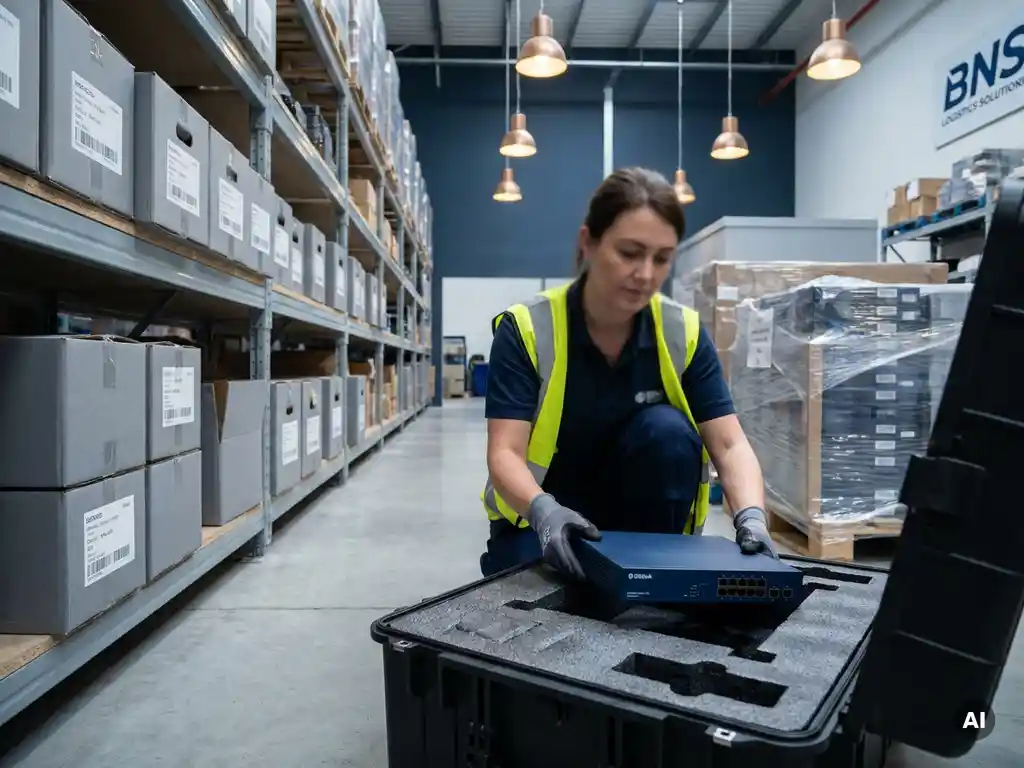
IT equipment fulfilment differs from standard B2B fulfilment primarily because technology products require individual-level tracking, technical preparation, and specialised handling that general goods simply do not. Where a standard B2B order might involve picking and shipping a box of stationery, an IT fulfilment operation must account for serial numbers, firmware versions, device configurations, and condition assessments at the product level. The sections below unpack the specific differences across the most common questions logistics and procurement teams ask when evaluating an IT fulfilment partner.
What makes IT equipment harder to fulfil than standard B2B products?
IT equipment is harder to fulfil than standard B2B products because each device is a distinct, trackable asset with its own identity, technical state, and handling requirements. Unlike commodity goods, a router, modem, or network switch cannot simply be counted by the box: it must be registered, verified, and often prepared before it can be shipped to a customer or deployed in the field.
Several factors combine to make technology fulfilment more demanding than general B2B order processing:
- Product heterogeneity: A single SKU can encompass multiple hardware revisions, firmware versions, or regional configurations. Two devices that look identical on a shelf may behave differently in the field if their software states differ.
- High unit value: IT hardware typically carries a higher per-unit cost than most general goods, making picking errors or shipping damage disproportionately expensive.
- Strict traceability requirements: Regulatory obligations, warranty tracking, and customer audit trails all demand that individual devices can be located and identified at any point in the supply chain.
- Technical readiness: Many devices must be configured, tested, or labelled before dispatch. This preparation cannot happen at the point of delivery: it must be built into the fulfilment workflow itself.
- Complex returns: Returned IT equipment requires inspection, diagnostics, and a condition decision before it can be restocked, repaired, or retired. This is far more involved than returning a generic product to a shelf.
Together, these factors mean that a warehouse management system and operational process designed for standard goods will quickly fall short when handling technology products at scale.
What is serialised inventory tracking and why does IT fulfilment require it?
Serialised inventory tracking is the practice of registering and managing each individual product unit by its unique serial number, rather than treating all units of the same SKU as interchangeable. In IT fulfilment, this is essential because devices are individual assets, each with its own warranty, firmware state, configuration history, and ownership record, not simply quantities of identical stock.
In a standard warehouse, inventory is typically managed at the SKU or batch level: a bin holds 50 units of a product, and any one of those units can fulfil an order. Serialised inventory management works differently. Every device that enters the warehouse is scanned and registered against its serial number. From that moment, the system knows exactly where that specific unit is, what its condition is, and what has happened to it.
For IT equipment fulfilment, serial number tracking serves several practical purposes:
- It allows a telecom operator to confirm which specific modem was shipped to which customer, critical for warranty claims and field support.
- It enables accurate returns matching, so a returned device can be linked back to its original shipment and condition at the time of dispatch.
- It supports compliance with manufacturer warranty terms, which are typically tied to individual serial numbers rather than batch purchases.
- It gives logistics managers real-time visibility into the exact composition of their stock, not just the total quantity.
Without serialised tracking, an IT fulfilment operation is essentially managing technology products as if they were generic goods, an approach that leads to inventory discrepancies, warranty disputes, and an inability to respond accurately when a customer or field engineer asks exactly what was sent and when.
How does device configuration fit into the IT fulfilment process?
Device configuration is the process of preparing a piece of hardware, loading the correct firmware, applying a configuration file, setting network parameters, or installing required software, so that it arrives at its destination ready for immediate deployment. In IT fulfilment, this preparation is integrated directly into the logistics workflow rather than left to the end customer or field engineer.
This matters because deploying unconfigured hardware creates delays and increases the risk of errors. A telecom operator shipping routers to business customers, for example, cannot rely on each customer to configure the device correctly. The device must arrive pre-configured, tested, and ready to connect. The same applies to managed service providers deploying networking equipment, or healthcare technology suppliers sending devices that must meet specific operational parameters before use.
When technical services are integrated into the fulfilment process, the workflow typically looks like this:
- Devices arrive inbound and are registered against their serial numbers.
- Technical specialists apply the required firmware update or configuration file.
- Each device is tested to confirm it functions correctly and meets the specification.
- The prepared device is labelled, packaged, and handed to the outbound fulfilment team for dispatch.
By combining these steps within a single logistics operation, businesses avoid the cost and delay of shipping devices to a separate technical facility before fulfilment. It also reduces the number of handoffs in the supply chain, which is one of the most common sources of damage, delay, and inventory discrepancy in technology distribution.
How does returns handling differ for IT equipment compared to standard goods?
Returns handling for IT equipment differs from standard goods returns because each returned device must be individually assessed, tested, and given a condition-based disposition. It cannot simply be returned to stock. Where a standard return might involve checking that packaging is intact and restoring a unit to a shelf, an IT equipment return triggers a structured inspection and decision process.
The key stages in IT equipment returns processing typically include:
- Receipt and identification: The returned device is scanned and matched against its serial number to confirm what was returned and link it to the original shipment.
- Condition assessment: The unit is inspected visually and functionally. Is it physically intact? Does it power on? Are there signs of damage or tampering?
- Diagnostics: For more complex devices, a technical diagnostic determines whether the hardware is functioning correctly and whether any data or configuration needs to be wiped.
- Disposition decision: Based on the assessment, the device is either reintegrated into stock, sent for repair, scheduled for refurbishment, or flagged for responsible disposal. Not every returned product can be refurbished or resold. The outcome depends on its condition.
This structured approach to reverse logistics is what separates IT returns management from general consumer returns. It requires technical knowledge, serialised tracking, and clear decision criteria, capabilities that a standard fulfilment operation is rarely equipped to provide. Handled well, it also creates opportunities to recover value from returned equipment that would otherwise be written off.
What should a business look for in an IT equipment fulfilment provider?
A business evaluating an IT equipment fulfilment provider should look for a combination of technical capability, product-level traceability, and operational flexibility, not simply warehouse capacity and shipping speed. The provider must be able to manage technology products as individual assets, not interchangeable units, and integrate technical preparation into the fulfilment workflow where needed.
The most important criteria to assess include:
- Serialised inventory management: The provider’s warehouse management system must support serial number tracking at the individual device level, with real-time visibility into stock locations and product history.
- Technical services capability: If devices need configuration, firmware updates, or testing before dispatch, these processes should be available within the same operational environment to avoid unnecessary handling and transport.
- Returns management: The provider should have a structured process for receiving, inspecting, and dispositioning returned IT equipment, including the ability to repair or refurbish where appropriate.
- Experience with technology products: Handling routers, modems, networking hardware, or medical devices is different from handling general merchandise. Ask whether the provider has relevant sector experience and understands the traceability and compliance requirements involved.
- Value-added logistics services: Look for capabilities such as repackaging, labelling, kitting, and co-packing, which are often needed in technology distribution but absent from standard fulfilment operations. These value-added services can significantly reduce the number of separate vendors a business needs to manage.
- Scalability and reporting: The provider should be able to scale with your order volumes and provide clear, accessible reporting on inventory levels, order status, and returns activity.
A fulfilment partner that combines these capabilities within a single, integrated operation reduces the number of handoffs in your supply chain, improves visibility, and lowers the risk of errors that are particularly costly when the products involved are high-value technology assets.
How BNS Data Logistics supports IT equipment fulfilment
BNS Data Logistics provides specialist fulfilment and logistics services designed specifically for businesses managing IT hardware, telecommunications equipment, networking devices, and related technology products. Rather than adapting a general fulfilment model to technology products, BNS has built its operations around the requirements of serialised, technically complex goods.
- Serial number tracking through Cosmos: BNS uses its proprietary Cosmos warehouse management and product information system to register and track individual devices by serial number from inbound receipt through to outbound dispatch and returns.
- Integrated technical services: Device configuration, firmware updates, functional testing, and cosmetic restoration are performed within BNS’s logistics environment, eliminating the need for a separate technical facility before fulfilment.
- Structured returns management: BNS manages the full returns cycle for IT equipment, including receipt, inspection, diagnostics, condition assessment, and disposition, supporting value recovery where the product and its condition allow.
- Value-added logistics: Repackaging, labelling, kitting, and co-packing capabilities are available within the same operation, reducing vendor complexity for technology distributors and telecom operators.
- Sector experience: BNS serves IT hardware suppliers, telecommunications operators, internet service providers, healthcare technology companies, and e-commerce businesses selling technology products, bringing relevant operational knowledge to each engagement.
If your business handles technology products and needs a fulfilment partner capable of managing them as individual assets rather than generic stock, contact BNS Data Logistics to discuss your specific requirements.
Related Articles
- What are the benefits of integrating warehousing, fulfilment and device tracking?
- What fulfilment services do telecom equipment manufacturers need?
- How can technology companies maintain real-time visibility of outsourced inventory?
- How can serial number tracking improve the distribution of telecom equipment?
- How can technology companies improve the fulfilment of serialized products?